
Deposit Insurance
Problems with raising the FDIC insurance limit
Proposals to sharply raise federal deposit insurance promise stability for small businesses—but the reality is the opposite. The measure would do more harm than good to American families and small businesses, and benefit less than 1% of all depositors. Nearly every household and small business is already fully covered under today’s limits. Expanding this coverage would raise costs, reward risky behavior, and weaken the safeguards that keep our financial system strong.
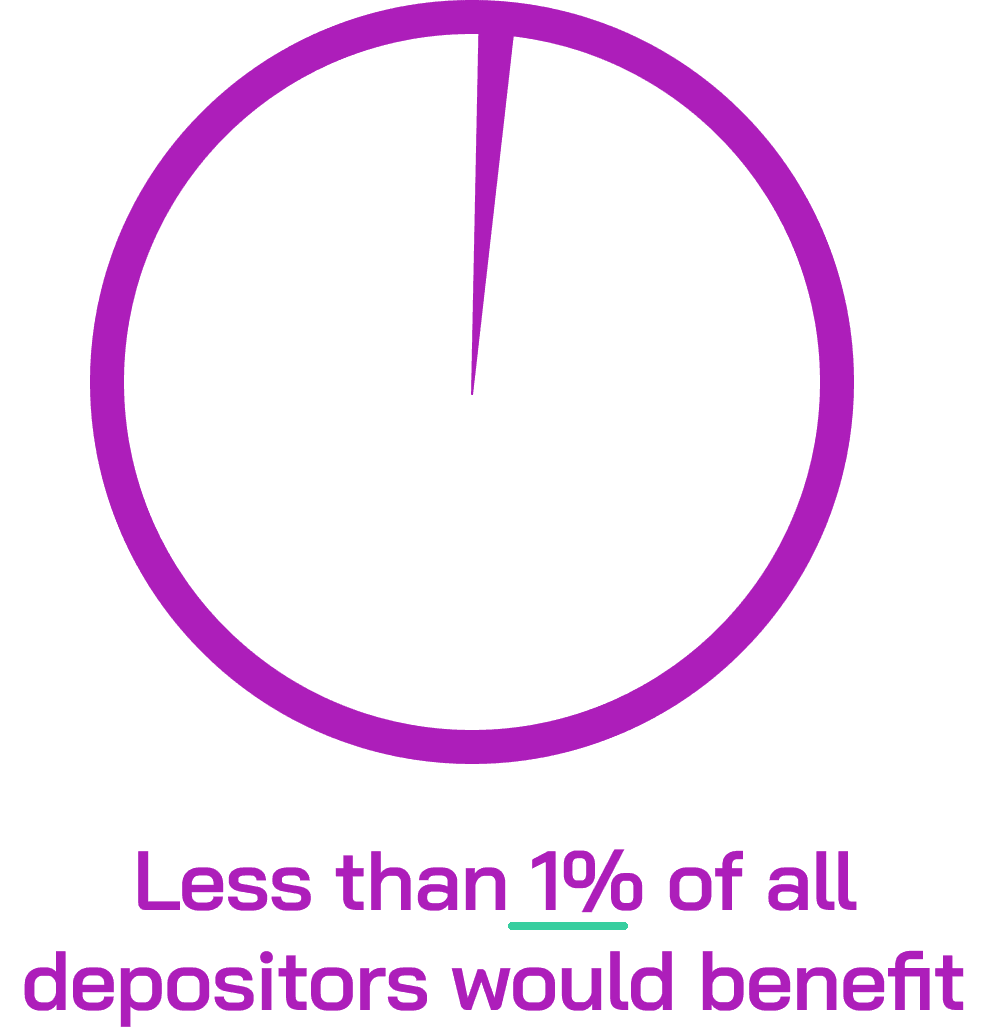
Who benefits from a higher FDIC cap?
A multimillion-dollar FDIC cap helps a select few at the expense of small businesses.
The proposed increase in the FDIC insurance cap wouldn’t help the average American or small business:
- Most Americans wouldn't benefit: Data from the FDIC show that over 99% of all U.S. deposit accounts already fall below the current $250,000 limit, meaning nearly every account holder is already fully protected.
- According to Federal Reserve data, even the highest earners in America—the top 10% by income—had a median account balance of $111,600.
- Small businesses wouldn't benefit: According to a study of 600,000 small businesses, the average small business holds $12,100 in its bank account—less than 5% of the current FDIC limit. Only a tiny population would actually benefit from a higher limit.
Who's actually paying for this?
A higher deposit insurance limit means higher costs for families and small businesses.
Expanding FDIC insurance isn’t free. A sharp increase in coverage means drastically higher premiums—costs that will trickle down to consumers and small businesses.
- American families and Main Street businesses would bear the brunt of this increase, facing higher fees and fewer lending opportunities that could otherwise finance small business loans and community investments.
The bottom line is that families would pay more to borrow, and small businesses would find it harder to access affordable credit.
What happens when nearly every account is guaranteed?
Insuring nearly everything invites risk and undermines stability.
When deposits are fully insured by you, the taxpayer, banks and depositors alike have less incentive to keep your money safe.
- We've seen this before: During the Savings & Loan Crisis of the 1980s, expanded deposit insurance helped fuel a wave of risky behavior, causing over 700 bank failures and over $300 billion in losses to the U.S. economy.
- Sharply increasing the FDIC's insurance cap would result in more reckless behavior, not more stability. With most deposits guaranteed, risky investors will have no checks and balances, and taxpayers would shoulder the cost.
Higher coverage doesn’t make the system safer—it magnifies crises and shifts the costly fallout onto the public.